
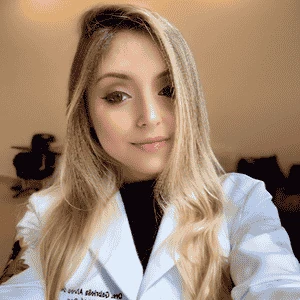
Gabriella Alves de Oliveira
Master Education Institute President Antonio Carlos (IMEPAC), BrazilPresentation Title:
Early dissecting cellulitis of the scalp following repeated microinfusion of medication into the skin in a patient with androgenetic alopecia and long-term exogenous testosterone use: A case report
Abstract
Dissecting cellulitis of the scalp is an uncommon chronic inflammatory disorder within the follicular occlusion spectrum and may progress to permanent cicatricial alopecia if not recognized early. We report a case of a 34-year-old male with androgenetic alopecia, two years of exogenous testosterone use, and a recent history of six-monthly sessions of scalp microinfusion of medication into the skin, who developed painful and pruritic inflammatory scalp nodules approximately 45 days after the last procedure. The procedure was performed using a Cheyenne Unlimited 4 dermograph fitted with a 2710MG cartridge, corresponding to a 27-needle magnum configuration with 0.30 mm diameter needles, operating at 6.1 V, with the needle depth set to 1.2 mm. Clinical examination showed focal inflammatory alopecic nodules over a background of patterned hair thinning. Trichoscopy demonstrated perifollicular erythema, reduced follicular density, broken hairs, black dots, white structureless areas, and partial preservation of follicular openings, without classic features of alopecia areata. Histopathology showed hypodermal granulation tissue, intense mixed leukocytic inflammation composed of lymphocytes, plasma cells, neutrophils, macrophages, and foreign body-type multinucleated giant cells, follicular involvement with miniaturization, negative periodic acid-Schiff staining for fungi, and bacterial colonization in the infundibular and isthmic portions of hair follicles. These findings were consistent with dissecting folliculitis of the scalp. The patient was treated with oral antibiotics, intralesional corticosteroid, and high-potency topical corticosteroid, with partial inflammatory improvement and stabilization. This case highlights the value of clinicotrichoscopic pathologic correlation in early dissecting cellulitis and raises the possibility that repeated procedural microtrauma, barrier disruption, follicular injury, or secondary bacterial colonization may act as a local trigger in a predisposed patient. The long-term exogenous testosterone exposure should be interpreted as a possible modifying factor rather than proof of causality.
Biography
Gabriella Alves de Oliveira graduated in Medicine from Instituto Master de Ensino Presidente Antonio Carlos in June, 2022. In 2025, she completed a postgraduate specialization in Medical Trichology and Hair Restoration Surgery at BWS. She also serves as a fellow monitor in eyebrow transplantation training in São Paulo. She is currently involved in her first international publication as a physician and researcher in the field of trichology.

Organization Location
1309 Coffeen Avenue, STE 1200, Sheridan, Wyoming 82801, USA
Mail us at
Registration Enquiry
finance@scientexconferences.com
Call us at
USA : 2055981958
Quick Links
Past Conferences
No past conferences available.
Past Webinar
No past webinars available.