
Track: Dermatologic Surgery and Reconstruction
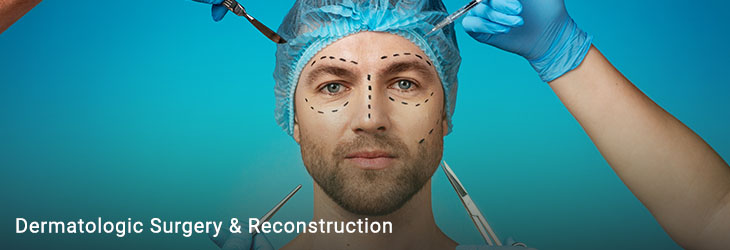
Dermatologic surgery and reconstruction represent a vital intersection of medical precision and aesthetic restoration. As skin cancers, traumatic injuries, and complex dermatoses increasingly require surgical intervention, dermatologists must balance oncologic control, functional preservation, and cosmetic outcomes. Advances in surgical techniques, reconstructive approaches, and perioperative care have transformed the field, enabling clinicians to achieve both curative and restorative goals. This session will highlight the evolving role of dermatologic surgery, from excision and Mohs micrographic surgery to advanced reconstructive procedures, emphasizing innovation, safety, and patient‑centered outcomes.
Overview:
The session will provide a comprehensive exploration of dermatologic surgery, beginning with foundational techniques such as excision, biopsy, and electrosurgery, and progressing to advanced procedures including Mohs micrographic surgery for skin cancers. Faculty will discuss reconstructive strategies ranging from simple closures to complex flaps and grafts, highlighting principles of tissue preservation, functional restoration, and aesthetic optimization. Special emphasis will be placed on perioperative management, complication prevention, and innovations such as laser‑assisted surgery and regenerative techniques. The program will also address patient counseling, ethical considerations, and multidisciplinary collaboration with oncology, plastic surgery, and rehabilitation. By integrating surgical precision with reconstructive artistry, participants will gain insights into delivering holistic care that restores both health and confidence.
Key Topics:
- Excision and biopsy techniques – Foundations of dermatologic surgery for diagnosis and treatment.
- Mohs micrographic surgery – Precision excision for skin cancers with maximal tissue preservation.
- Reconstructive approaches – Flaps, grafts, and closures tailored to functional and aesthetic needs.
- Laser‑assisted and regenerative surgery – Innovations enhancing outcomes and reducing morbidity.
- Perioperative care and patient counseling – Safety, complication prevention, and informed consent.
Learning Objectives:
- Apply evidence‑based surgical techniques for dermatologic diagnosis and treatment.
- Understand principles and applications of Mohs micrographic surgery.
- Evaluate reconstructive strategies to optimize functional and cosmetic outcomes.
- Integrate innovations such as laser and regenerative approaches into surgical practice.
- Enhance patient care through perioperative management, counseling, and multidisciplinary collaboration.
Scientific Highlights
- Inflammatory Dermatoses
- Pigmentary and Immune Mediated Skin Disorders
- Pediatric and Neonatal Dermatology
- Obstetric and Women’s Dermatology
- Geriatric Dermatology
- Dermatologic Oncology
- Rare and Critical Skin Diseases
- Clinical Trichology
- Photodermatology: UV Damage, Photoaging and Phototherapy
- Wound Healing and Chronic Ulcers
- Diagnostic Dermatopathology
- Aesthetic and Cosmetic Dermatology
- Advanced Dermatology Treatments
- Dermatologic Surgery and Reconstruction
- Digital Dermatology: AI, Teledermatology and Emerging Technologies
- Practical Dermatology: Case Studies and Outcomes

Organization Location
1309 Coffeen Avenue, STE 1200, Sheridan, Wyoming 82801, USA
Mail us at
Registration Enquiry
finance@scientexconferences.com
Call us at
USA : 2055981958
Quick Links
Past Conferences
No past conferences available.
Past Webinar
No past webinars available.