
Track: Pigmentary and Immune Mediated Skin Disorders
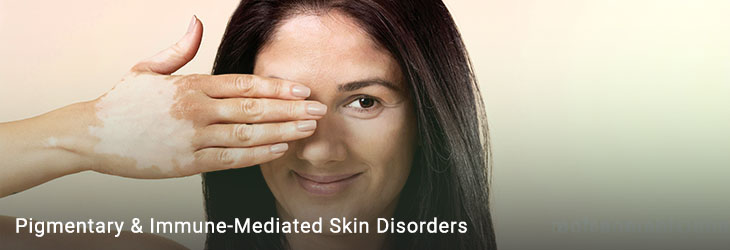
Pigmentary and immune‑mediated skin disorders represent a diverse group of conditions that profoundly affect patients both medically and psychosocially. Disorders such as vitiligo, melasma, and post‑inflammatory hyperpigmentation are highly visible, often leading to stigma and reduced quality of life. At the same time, immune‑mediated diseases including lupus erythematosus, dermatomyositis, and systemic sclerosis pose diagnostic and therapeutic challenges due to their multisystem involvement. This session will explore the intersection of pigmentary changes and immune dysregulation, highlighting advances in pathogenesis, diagnostics, and therapy.
Overview:
The session will provide a comprehensive review of pigmentary disorders and immune‑mediated dermatoses, emphasizing both clinical recognition and mechanistic insights. Faculty will discuss vitiligo pathogenesis and novel immunotherapies, melasma management strategies, and the role of pigmentation in systemic autoimmune diseases. Advances in imaging, biomarkers, and targeted therapies will be highlighted, alongside psychosocial support and patient counseling.
Key Topics:
- Vitiligo – Pathogenesis, immunotherapy, and psychosocial impact.
- Melasma and hyperpigmentation – Evidence‑based management and preventive strategies.
- Autoimmune connective tissue diseases – Cutaneous manifestations of lupus, dermatomyositis, and systemic sclerosis.
- Pigmentary changes in systemic disease – Diagnostic relevance and clinical management.
- Emerging therapies – Targeted immunomodulators and novel pigmentary interventions.
Learning Objectives:
- Recognize the clinical spectrum of pigmentary and immune‑mediated skin disorders.
- Understand mechanisms linking pigmentation and immune dysregulation.
- Apply evidence‑based therapies for vitiligo, melasma, and autoimmune dermatoses.
- Integrate psychosocial support into patient care.
- Evaluate emerging therapies and diagnostic tools for improved outcomes.
Scientific Highlights
- Inflammatory Dermatoses
- Pigmentary and Immune Mediated Skin Disorders
- Pediatric and Neonatal Dermatology
- Obstetric and Women’s Dermatology
- Geriatric Dermatology
- Dermatologic Oncology
- Rare and Critical Skin Diseases
- Clinical Trichology
- Photodermatology: UV Damage, Photoaging and Phototherapy
- Wound Healing and Chronic Ulcers
- Diagnostic Dermatopathology
- Aesthetic and Cosmetic Dermatology
- Advanced Dermatology Treatments
- Dermatologic Surgery and Reconstruction
- Digital Dermatology: AI, Teledermatology and Emerging Technologies
- Practical Dermatology: Case Studies and Outcomes

Organization Location
1309 Coffeen Avenue, STE 1200, Sheridan, Wyoming 82801, USA
Mail us at
Registration Enquiry
finance@scientexconferences.com
Call us at
USA : 2055981958
Quick Links
Past Conferences
No past conferences available.
Past Webinar
No past webinars available.