
Track: Inflammatory Dermatoses
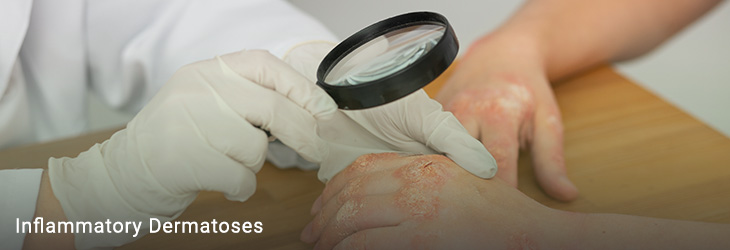
Inflammatory dermatoses remain a cornerstone of dermatologic practice, presenting with chronic relapses, complex immune mechanisms, and significant impact on patient quality of life. These conditions range from highly prevalent disorders such as eczema and psoriasis to rarer autoimmune blistering diseases, each requiring distinct diagnostic and therapeutic strategies. Advances in immunology and biotechnology have reshaped therapeutic approaches, offering new hope through biologics, immunomodulators, and precision medicine.
Overview:
This session provides a comprehensive exploration of inflammatory skin diseases, structured around major sub‑topics that reflect both clinical relevance and research innovation. Faculty will highlight common disorders, occupationally linked conditions, and rare autoimmune syndromes, while also addressing psychosocial burden and multidisciplinary care. The discussion will emphasize established standards of practice alongside emerging therapies that are redefining dermatology.
Key Topics:
- Eczema / Atopic Dermatitis – Chronic, relapsing inflammatory condition influenced by genetics and environment; focus on biologics and barrier repair.
- Psoriasis – Immune‑mediated disorder with systemic associations; advances in biologics and small molecules are central to care.
- Autoimmune Blistering Disorders – Includes pemphigus vulgaris and bullous pemphigoid; requires precision diagnostics and immunosuppressive or biologic therapies.
- Contact Dermatitis – Allergic and irritant forms with occupational relevance; emphasis on patch testing, prevention, and workplace safety.
- Chronic Inflammatory Dermatoses – Conditions such as lichen planus and hidradenitis suppurativa; complex pathomechanisms demand multidisciplinary care.
- Emerging Pathways & Precision Medicine – Cytokine networks (IL‑4, IL‑13, IL‑17, IL‑23) and genetic predispositions; personalized therapy approaches and long‑term monitoring.
Learning Objectives:
- Recognize the clinical spectrum of inflammatory dermatoses across common and rare presentations.
- Understand immune mechanisms and cytokine pathways driving chronic skin inflammation.
- Apply biologic and immunomodulator therapies effectively in diverse patient populations.
- Integrate precision medicine and genetic insights into dermatologic practice.
- Enhance patient outcomes through multidisciplinary collaboration and psychosocial support.
Scientific Highlights
- Inflammatory Dermatoses
- Pigmentary and Immune Mediated Skin Disorders
- Pediatric and Neonatal Dermatology
- Obstetric and Women’s Dermatology
- Geriatric Dermatology
- Dermatologic Oncology
- Rare and Critical Skin Diseases
- Clinical Trichology
- Photodermatology: UV Damage, Photoaging and Phototherapy
- Wound Healing and Chronic Ulcers
- Diagnostic Dermatopathology
- Aesthetic and Cosmetic Dermatology
- Advanced Dermatology Treatments
- Dermatologic Surgery and Reconstruction
- Digital Dermatology: AI, Teledermatology and Emerging Technologies
- Practical Dermatology: Case Studies and Outcomes

Organization Location
1309 Coffeen Avenue, STE 1200, Sheridan, Wyoming 82801, USA
Mail us at
Registration Enquiry
finance@scientexconferences.com
Call us at
USA : 2055981958
Quick Links
Past Conferences
No past conferences available.
Past Webinar
No past webinars available.